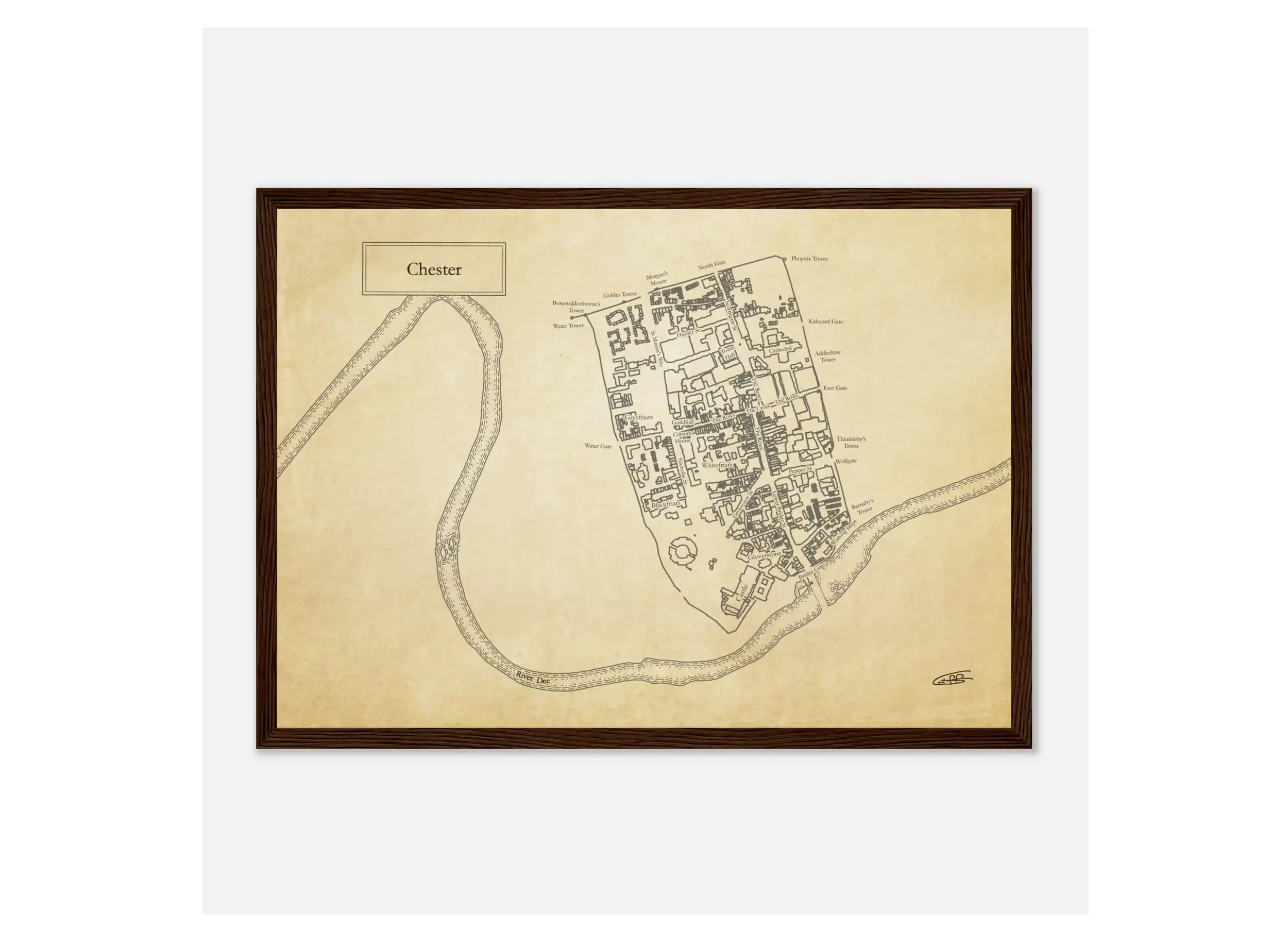
Chester is a city steeped in history. This map is part of an ongoing series exploring historic towns and cities, showing the extent formed by the historic city walls. Key areas and the intriguing names of towers, gates and places let you explore this city through its layers of time.
My field-trip to Chester was on one of the most wild-weather days of the year. Walking the walls I was hit by rain, high winds, scorching sun and then snow. But absolutely worth it - it was so exciting to explore and discover the pieces and tales of history, the ruins and the stories behind the names.
The result is a map, in my own historic styling, exploring the depth, structure and past of each place. Each map is created through a combination of detailed historical research, field-work and modern cartographical techniques, blended with my passion for history, places and maps.
No AI is used in my work.
This A3 map is printed onto Museum-Quality Archival paper, ensuring a high-quality and long-lasting piece of art for your wall. It comes unframed or in a wooden frame, with a range of frame colours to chose from.
Unframed £48
Framed £68
Free Worldwide Shipping
Notes: Each piece is individually printed, and subtle variations in tone and finish may occur.
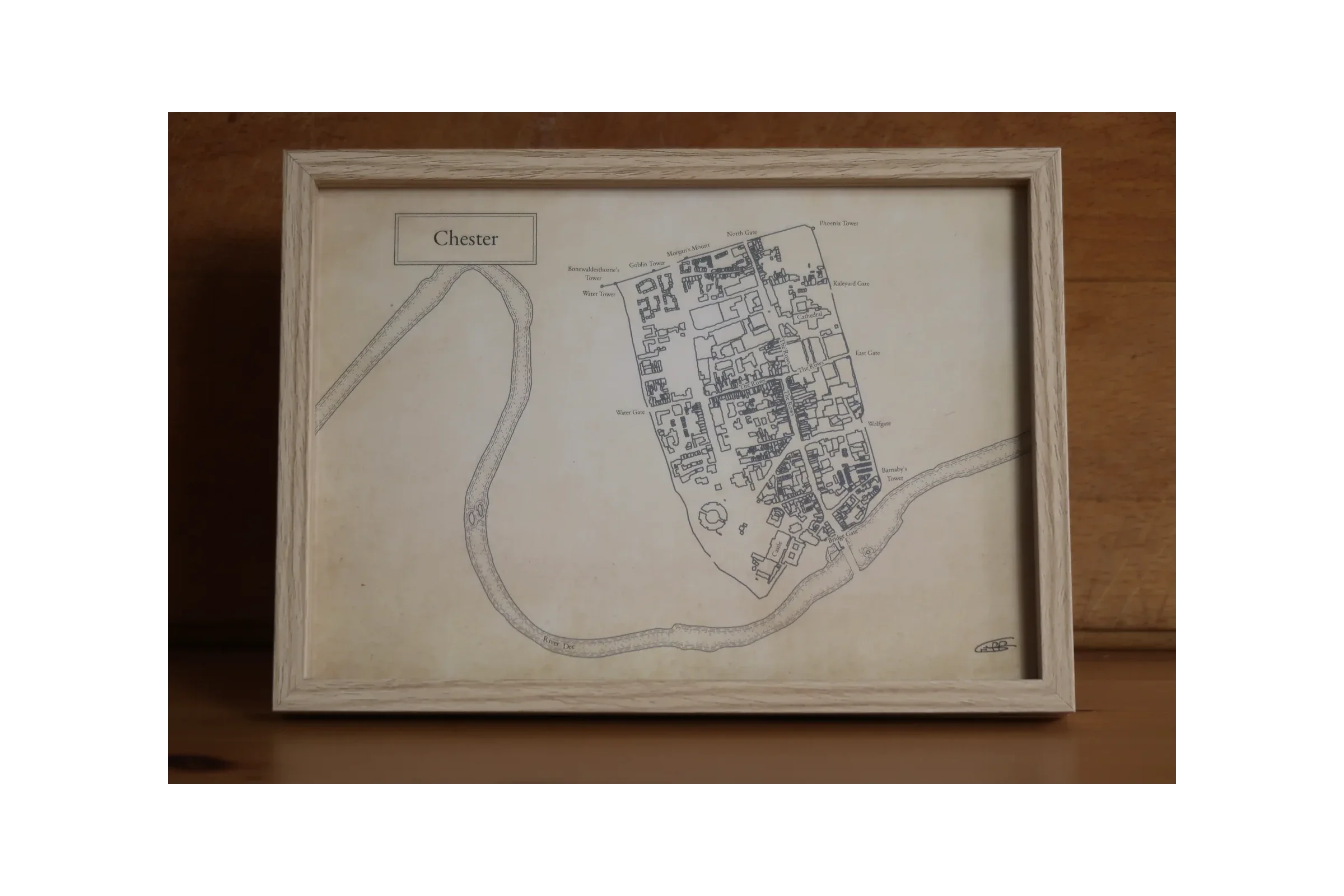
Chester is a city steeped in history.
This map is part of an ongoing series exploring historic towns & cities, showing the extent formed by the historic city walls. Key areas and the intriguing names of towers, gates and places let you explore this city through its layers of time.
My field-trip to Chester was on one of the most wild-weather days of the year. Walking the walls I was hit by rain, high winds, scorching sun and then snow. But absolutely worth it - it was so exciting to explore and discover the pieces and tales of history, the ruins and the stories behind the names.
The result is a map, in my own historic styling, exploring the depth, structure and past of each place.
Each map is created through a combination of detailed historical research, field-work and modern cartographical techniques, blended with my passion for history, places and maps.
Print Options; Memento (A5)
Free Worldwide Shipping
Notes: Each piece is individually printed, and subtle variations in tone and finish may occur.
It was perhaps the most blustery and changeable day that Chester had yet seen this year. The winds hit over 50 mph, it rained, it sleeted, it even snowed. But it was nevertheless a fantastic day spent exploring this historic city.
The history of Chester is layered upon itself time and again. The Romans built walls, baths and amphitheatres, the Normans made a stronghold here, the Tudors built rambling, two-storey shops, the wool trade thrived and the Victorians found it fashionable to stroll the length of the city walls.
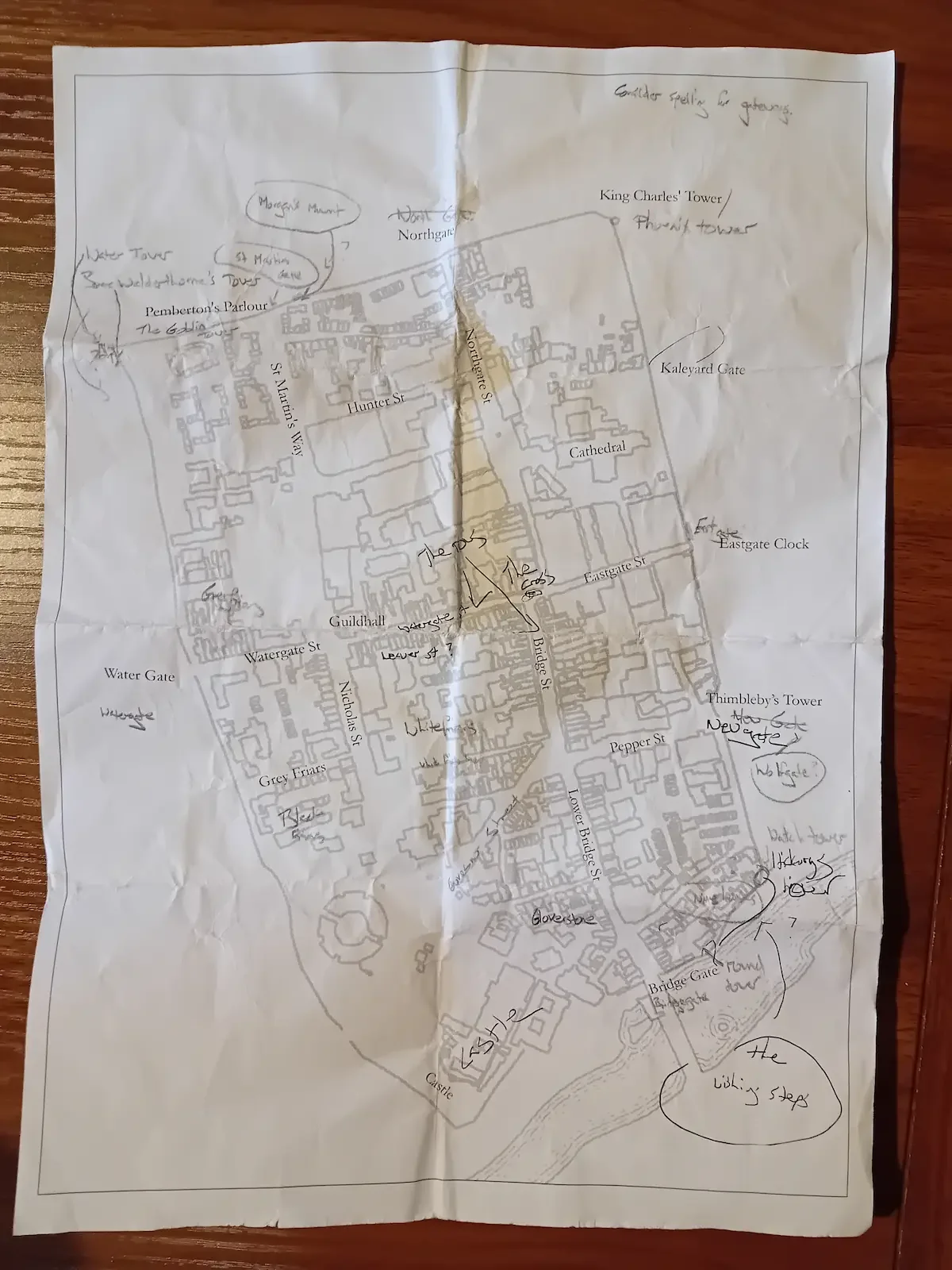
One of the challenges with cartography is deciding what to leave out, and with a city so rich, full and vibrant as Chester, this was often a painful decision. Having spent some time researching before the field-trip I felt I had a fair handle on the place. My first stop, as it often is, was the Visitor Information Centre. An hour quickly disappeared whilst I chatted over a cup of tea with the superbly knowledgeable, helpful and very patient staff and historians here. I scribbled notes and questions onto my field-map and jotted down places to find, explore and verify through the rest of the day.
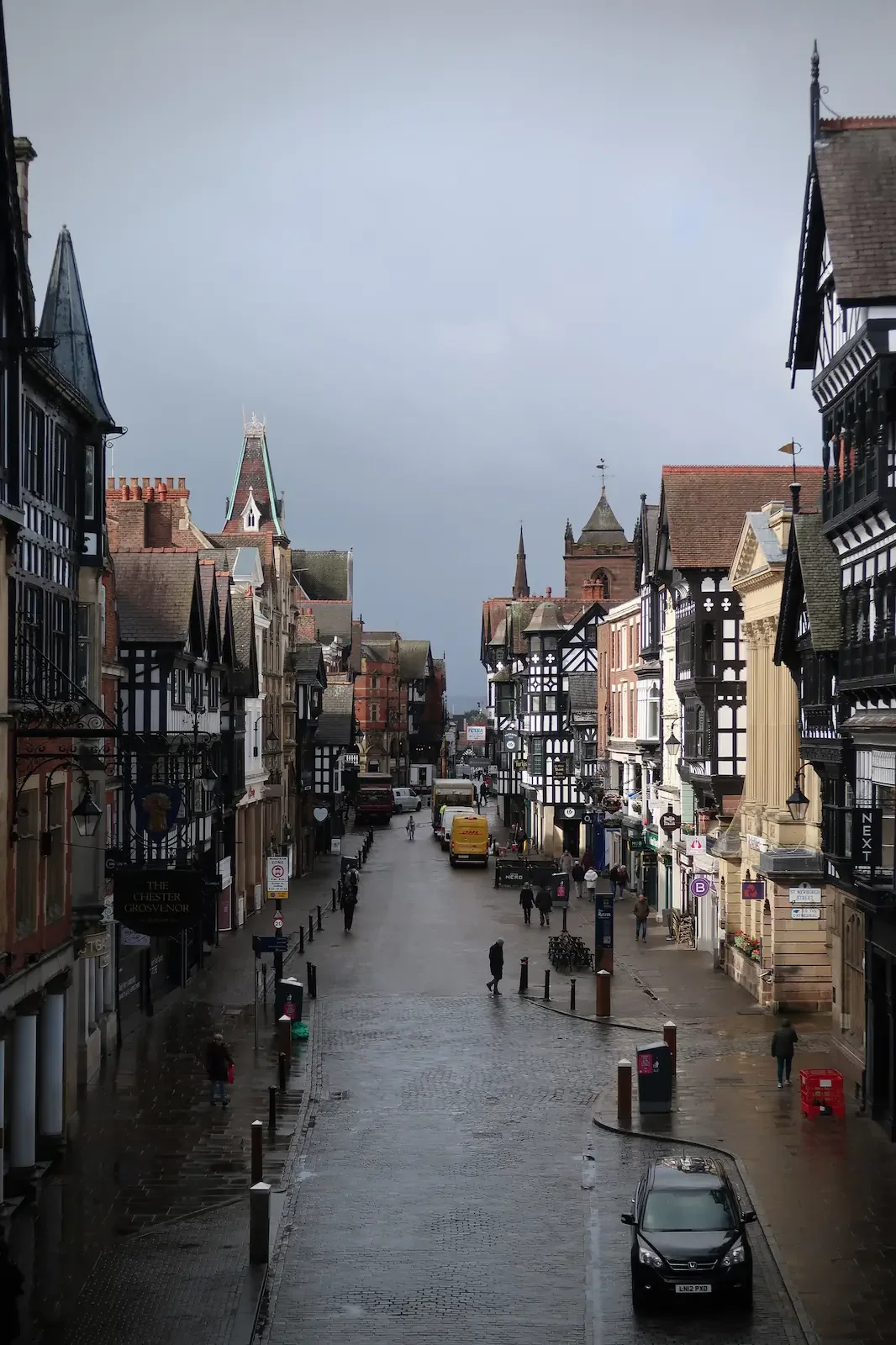
It was raining heavily, and side-ways, as I emerged and headed out along The Rows. The shambling, rickety-looking two-tier shops, with their white sides and dark wooden beams jumbled together either side of me, filled with curiosities and wending walkways. It felt busy, in-spite of the weather, and the coffee-shops and bakeries were doing a brisk morning trade.
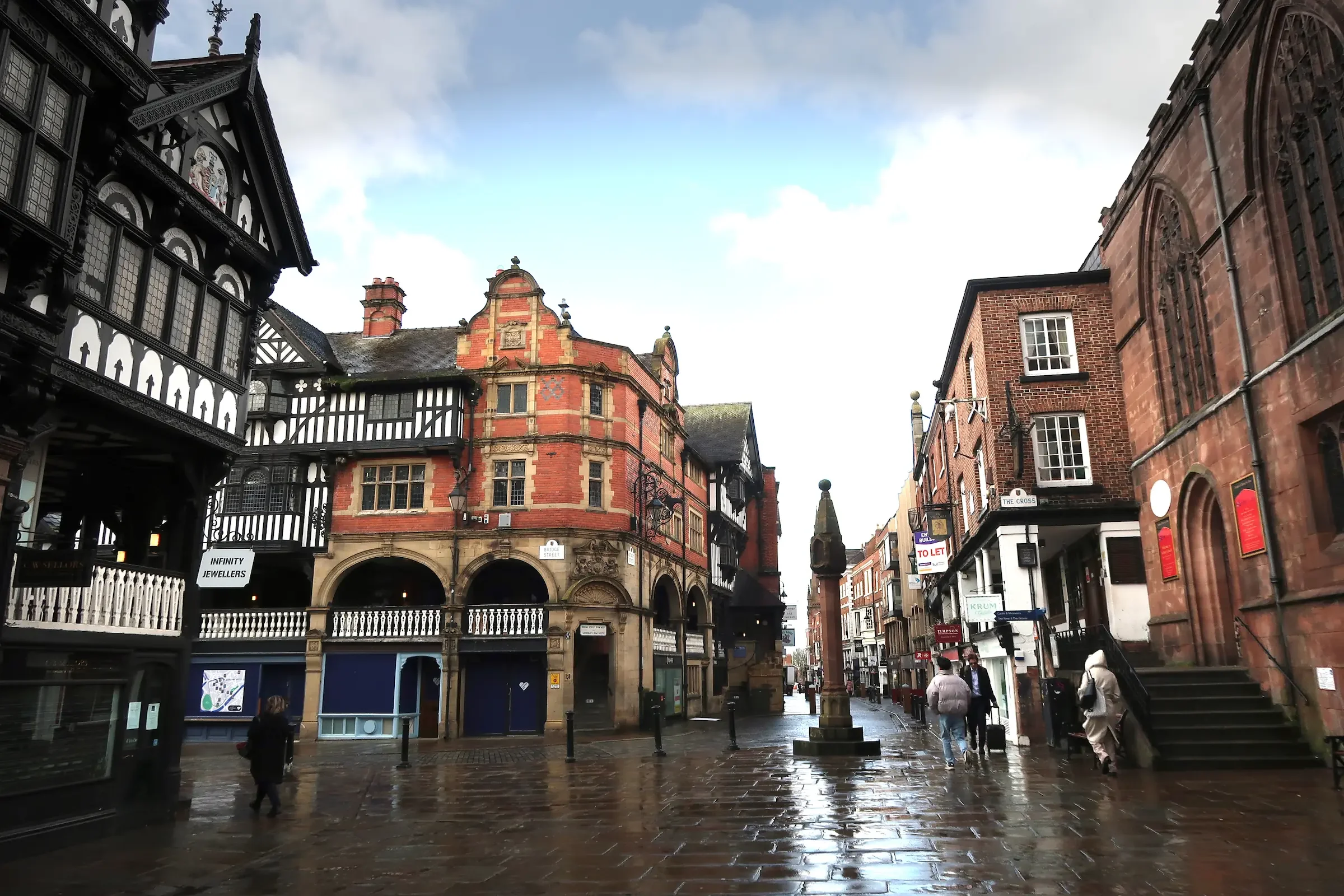
I stopped briefly to take-in the 14th Century High Cross, situated on The Cross. It took a little while, and some local knowledge, for me to untangle that The Cross is the intersection of streets here and the High Cross is the old sandstone pillar in the middle of this intersection
Further along Watergate street is the old Customs House and the Guildhall. It seemed odd that these should be up away from the river, until I learned that the Dee used to run up to the western city walls, hence the name Water Gate, and that this side of the city was its main trade hub until around the 15th Century.
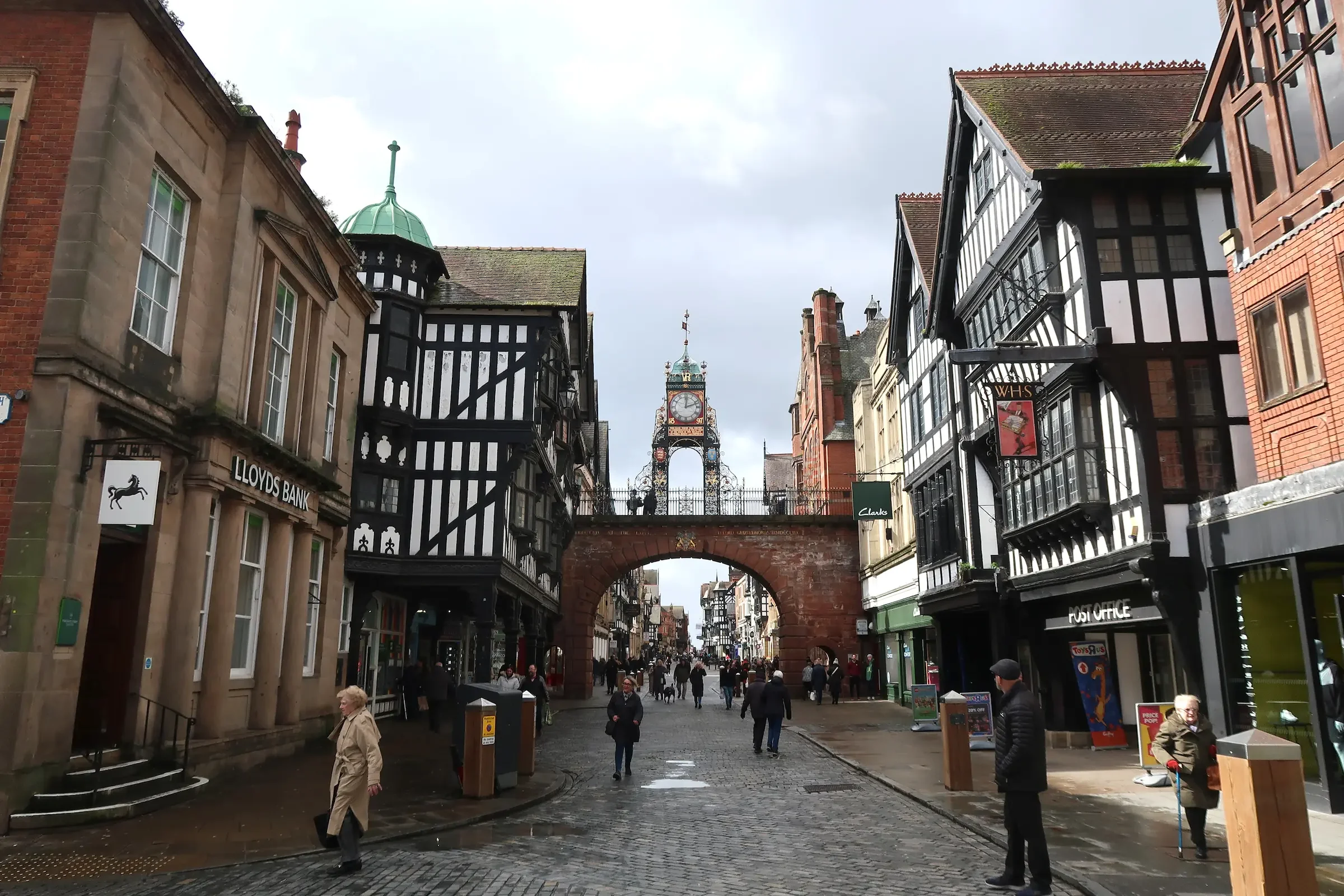
Already feeling damp and chilly, I headed over to East Gate and ducked inside the charming Huxley’s Cafe up on the city walls. This small, cosy establishment was just the break from the weather I needed to go over some of the walking guides I had picked up earlier and plan my exploration of the walls. The staff and owner were very friendly and chatty, and we chatted about maps and the city as I warmed up with a coffee. Amongst other things, they told me of the rumoured tunnels running beneath the old shops in the city centre, supposedly a warren of interconnected basements, old Roman sewers and tunnels down to the river used to quietly bring in goods. The archaeologists I spoke to told me they are only rumour and, with the exception of the Second World War era Churchill bunker and its tunnels, unfounded. Many locals I would speak to would tell me with certainty that the tunnels are there, some saying they have been in them, and where I could find an entrance.
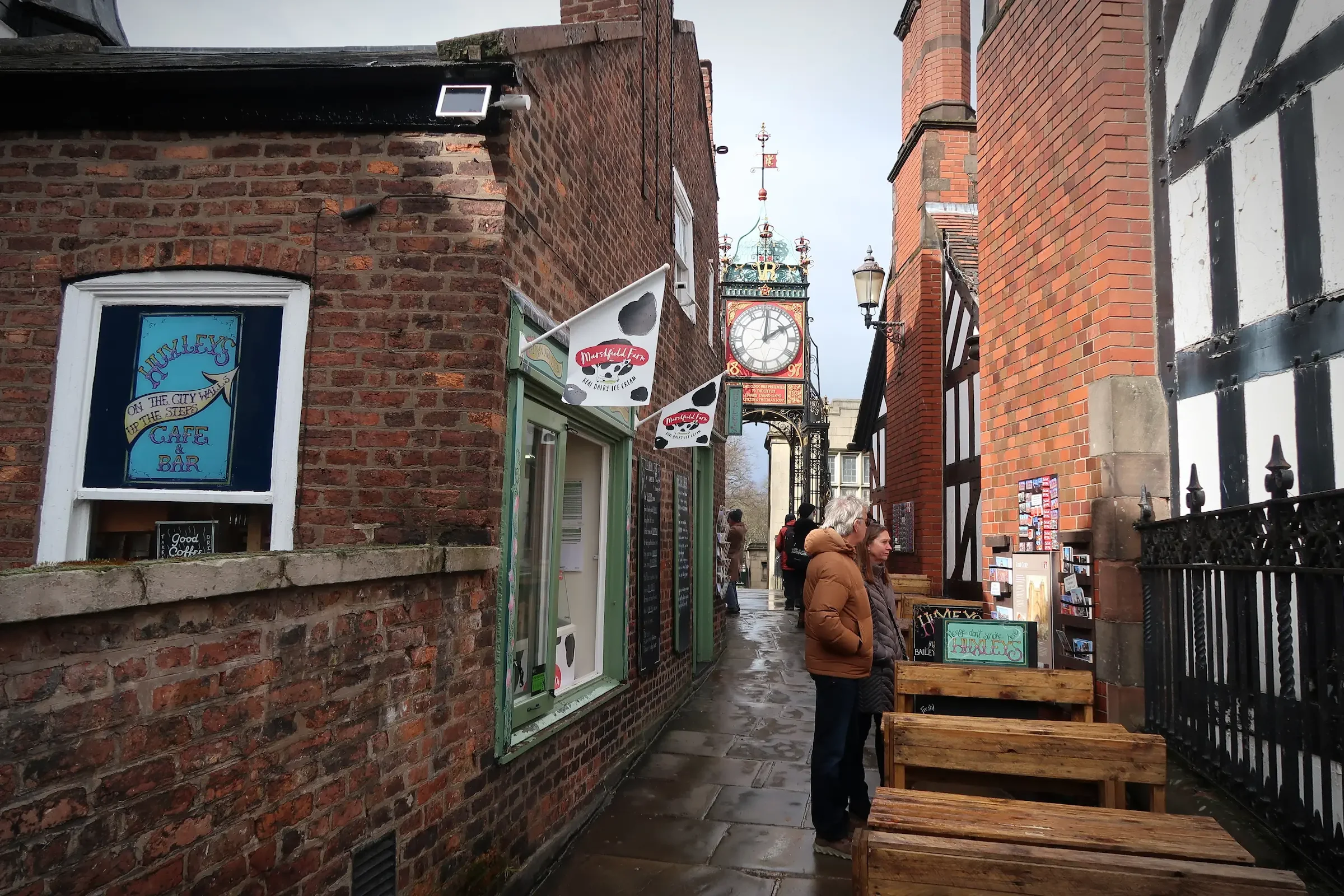
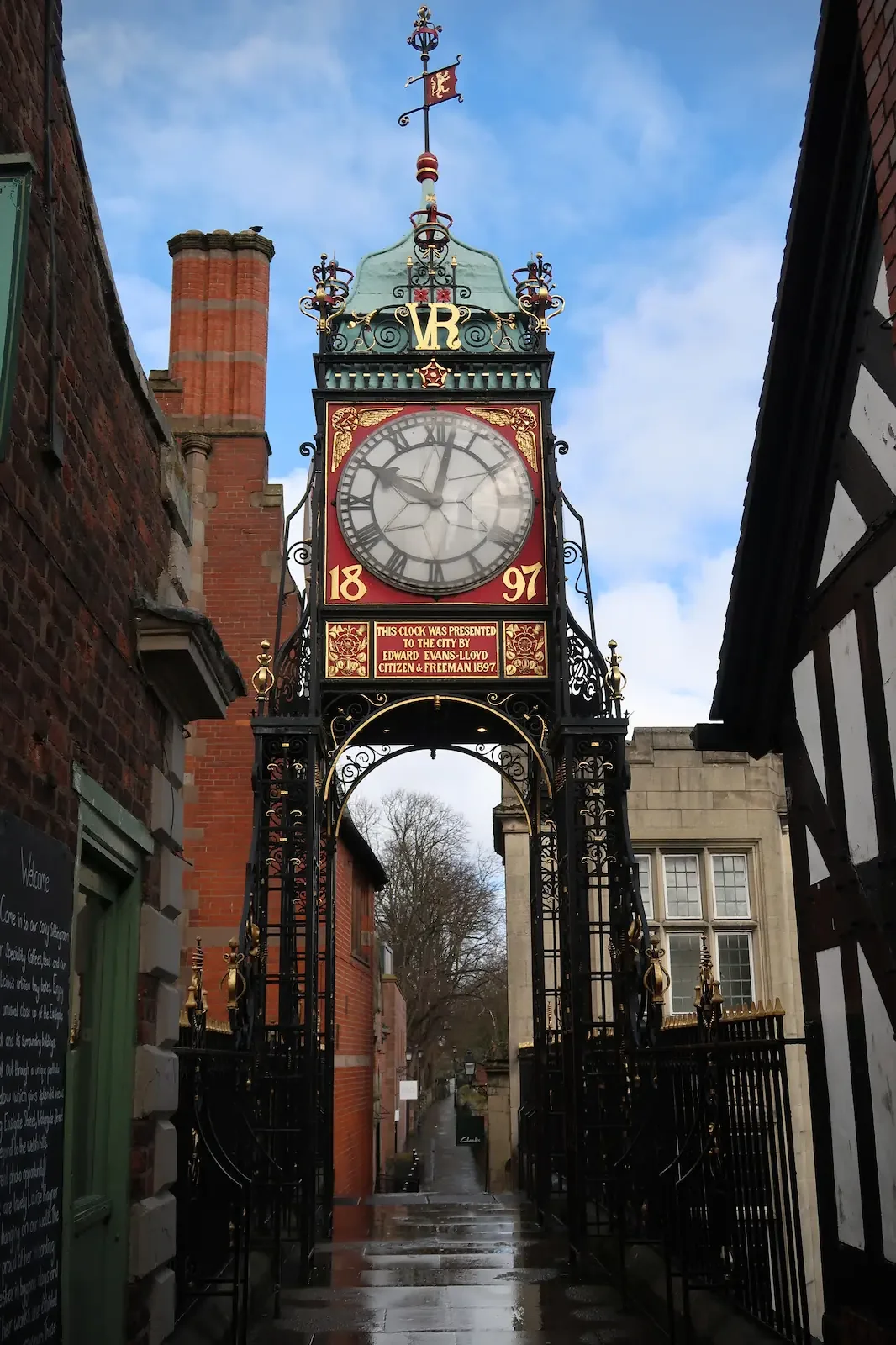
From the warmth of Huxley’s I emerged back onto the walls to admire the Eastgate Clock, a lovely example of 19th Century architecture.
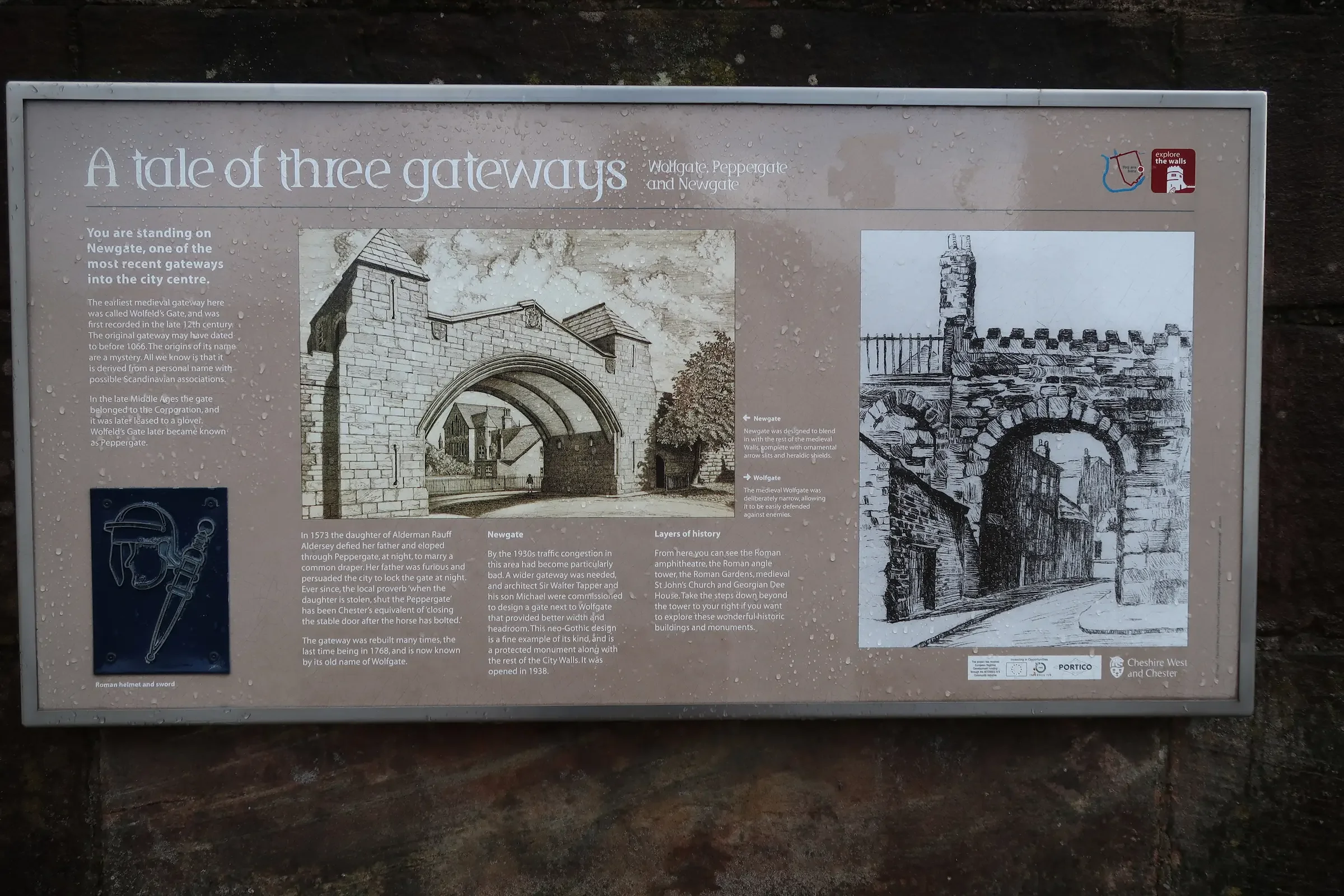
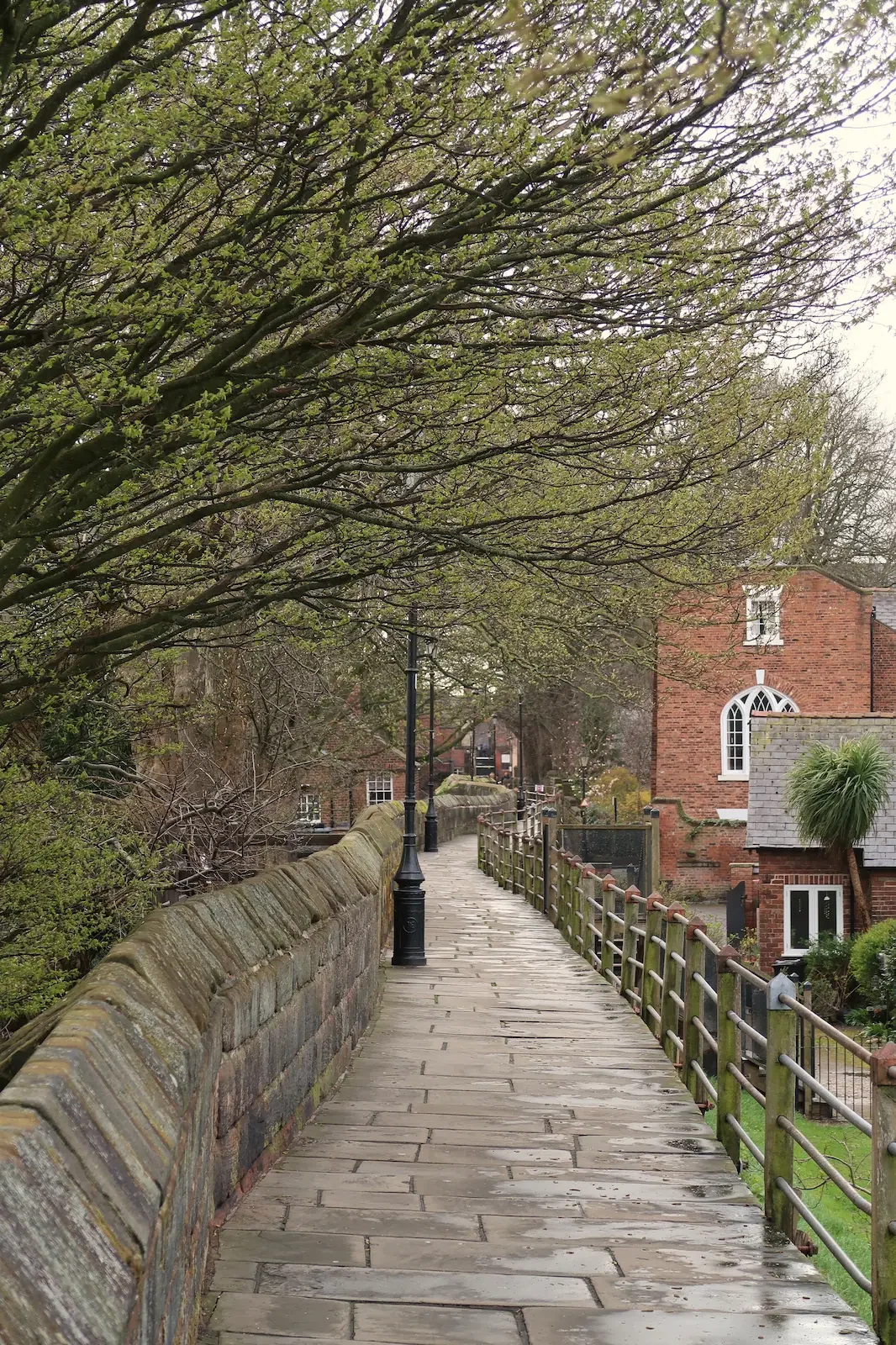
As I continued along the walls, in places narrow and wending, I really began to take in the layers of history here, many of the gates and towers having two or three names, such as Newgate/Peppergate/Wolfgate, King Charle’s Tower/Phoenix Tower/Newton Tower and Pemberton’s Tower/Goblin Tower (I never could find out how it got this latter name).
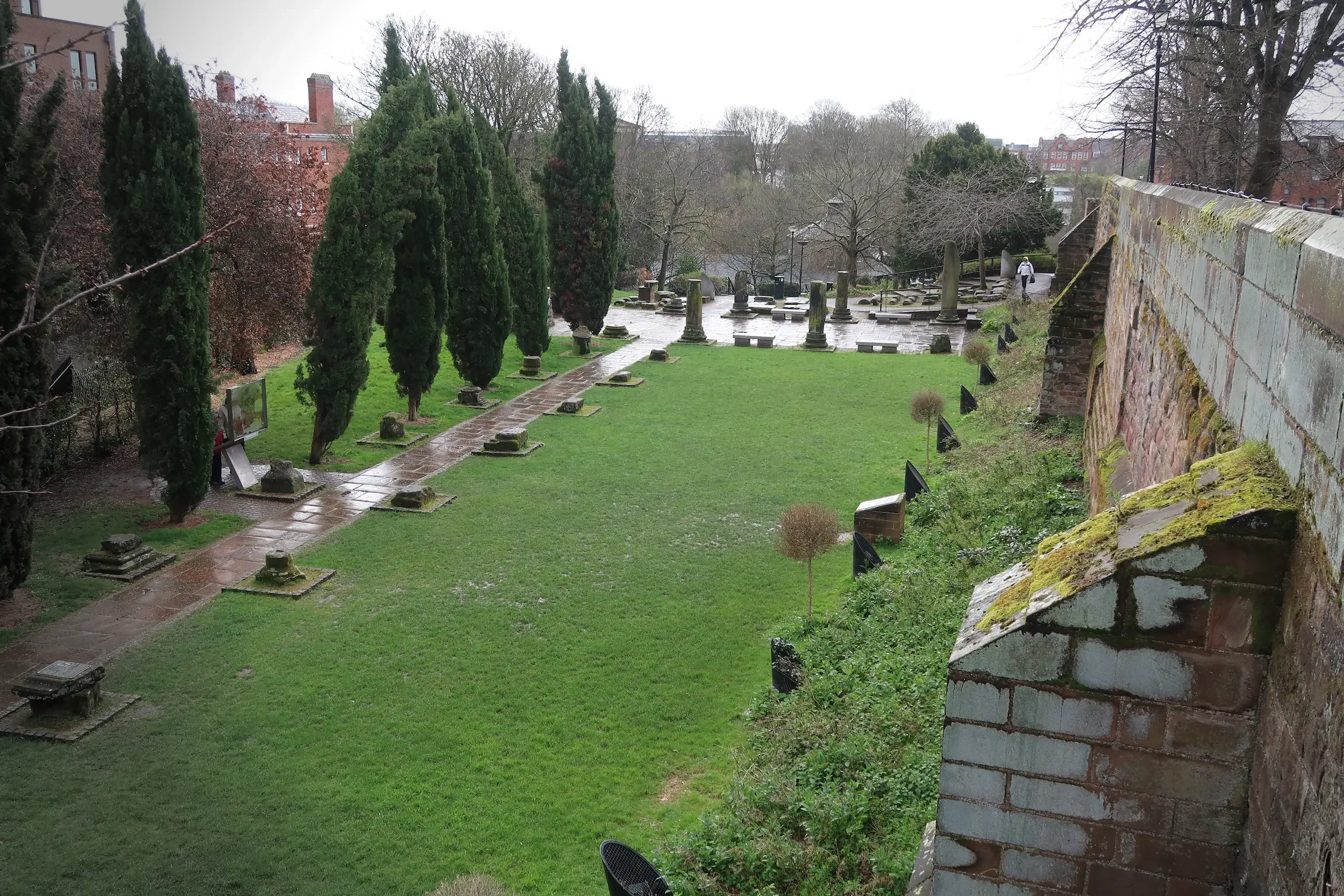
Past Roman gardens, down (and back up and back down) the Wishing Steps and along the river front, past the castle and alongside the racecourse and onto the northern wall for high, expansive views back out over the Dee Valley. Passing the racecourse and gardens along the western section of wall it is very hard to picture that the river once ran right alongside the walls, up to the Water Gate, bustling with boats and trade.
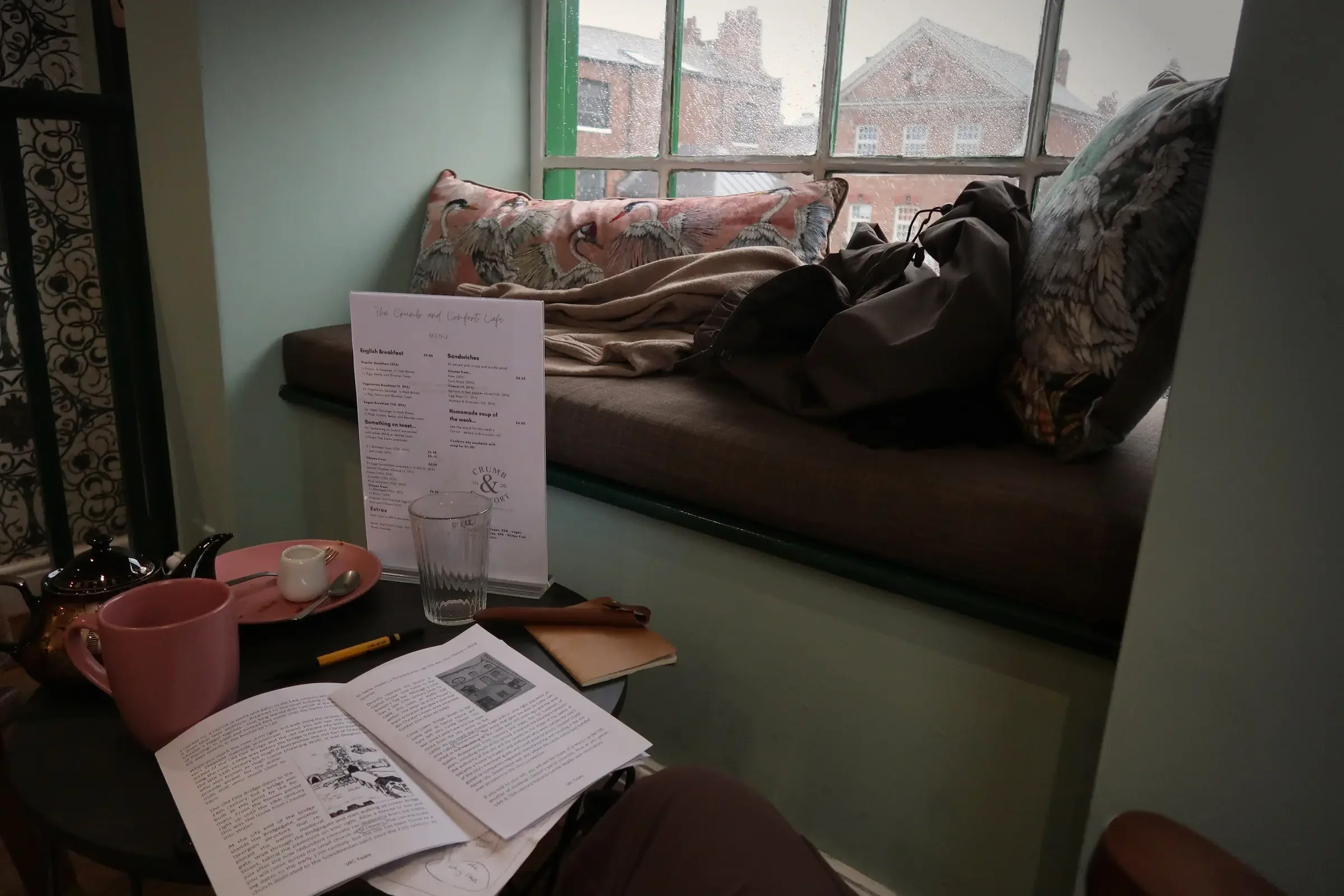
As in the last few minutes it had alternately rained, sleeted, snowed and rained, still sideways, I dipped into the Crumb and Comfort for some restorative tea and cake. Reclining in a soft, leather chair I listened as the wind and rain rattled and slammed the window panes. I sipped a pot of warm tea whilst I jotted in my journal and made notations on my field-map. It felt as though the city was beginning to form, at last, into shape.
Chester is a city steeped in history. This map is part of an ongoing series exploring historic towns and cities, showing the extent formed by the historic city walls. Key areas and the intriguing names of towers, gates and places let you explore this city through its layers of time.
My field-trip to Chester was on one of the most wild-weather days of the year. Walking the walls I was hit by rain, high winds, scorching sun and then snow. But absolutely worth it - it was so exciting to explore and discover the pieces and tales of history, the ruins and the stories behind the names.
The result is a map, in my own historic styling, exploring the depth, structure and past of each place. Each map is created through a combination of detailed historical research, field-work and modern cartographical techniques, blended with my passion for history, places and maps.
No AI is used in my work.
This A3 map is printed onto Museum-Quality Archival paper, ensuring a high-quality and long-lasting piece of art for your wall. It comes unframed or in a wooden frame, with a range of frame colours to chose from.
Unframed £48
Framed £68
Free Worldwide Shipping
Notes: Each piece is individually printed, and subtle variations in tone and finish may occur.
Chester is a city steeped in history.
This map is part of an ongoing series exploring historic towns & cities, showing the extent formed by the historic city walls. Key areas and the intriguing names of towers, gates and places let you explore this city through its layers of time.
My field-trip to Chester was on one of the most wild-weather days of the year. Walking the walls I was hit by rain, high winds, scorching sun and then snow. But absolutely worth it - it was so exciting to explore and discover the pieces and tales of history, the ruins and the stories behind the names.
The result is a map, in my own historic styling, exploring the depth, structure and past of each place.
Each map is created through a combination of detailed historical research, field-work and modern cartographical techniques, blended with my passion for history, places and maps.
Print Options; Memento (A5)
Free Worldwide Shipping
Notes: Each piece is individually printed, and subtle variations in tone and finish may occur.
