Corfe Castle
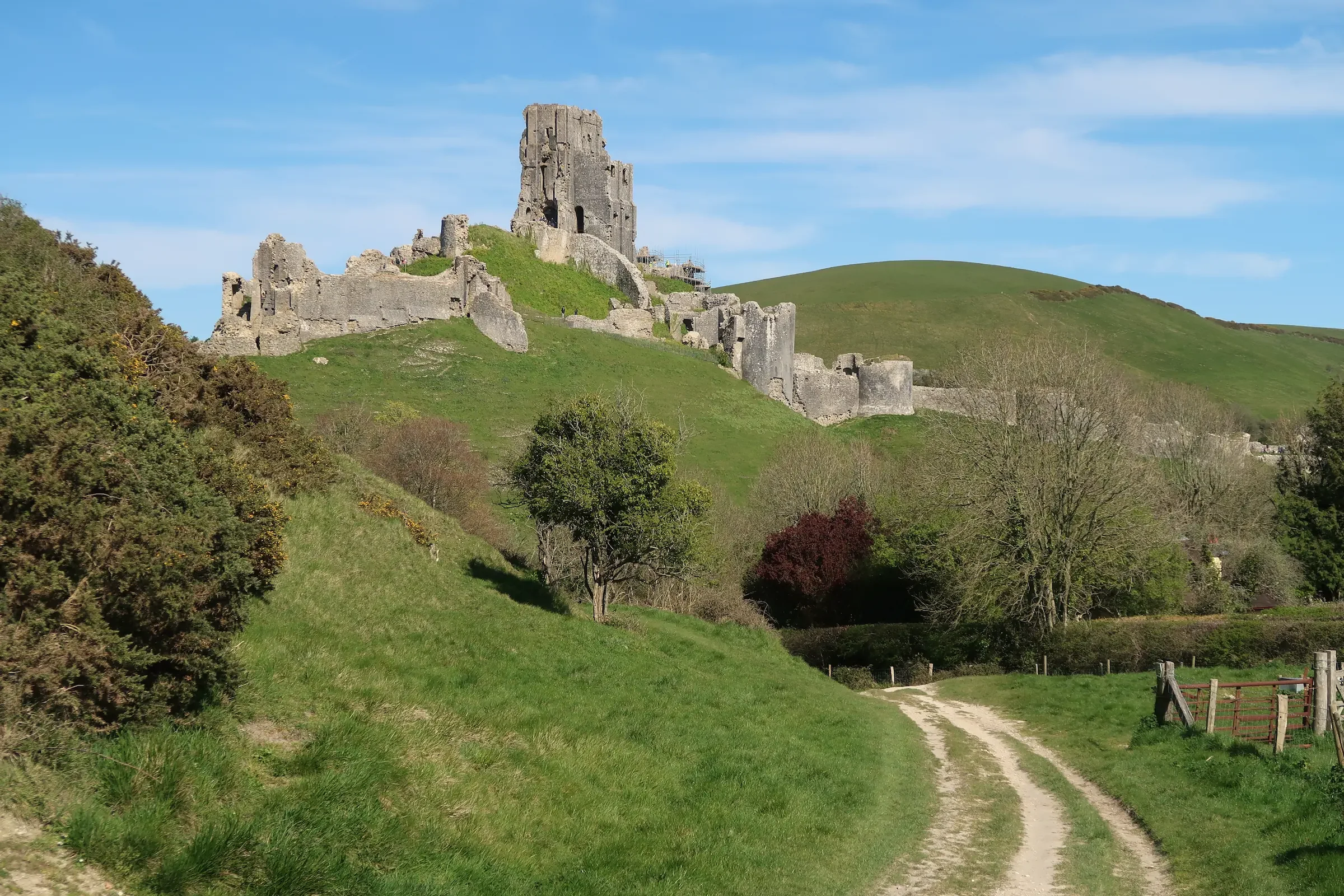
The approach across summer meadows, along the footpath, showed off the majestic silhouette of the castle in the morning sun. But it was as I crossed the stone bridge and entered through the gatehouse that I really felt the imposing presence of Corfe Castle around me.
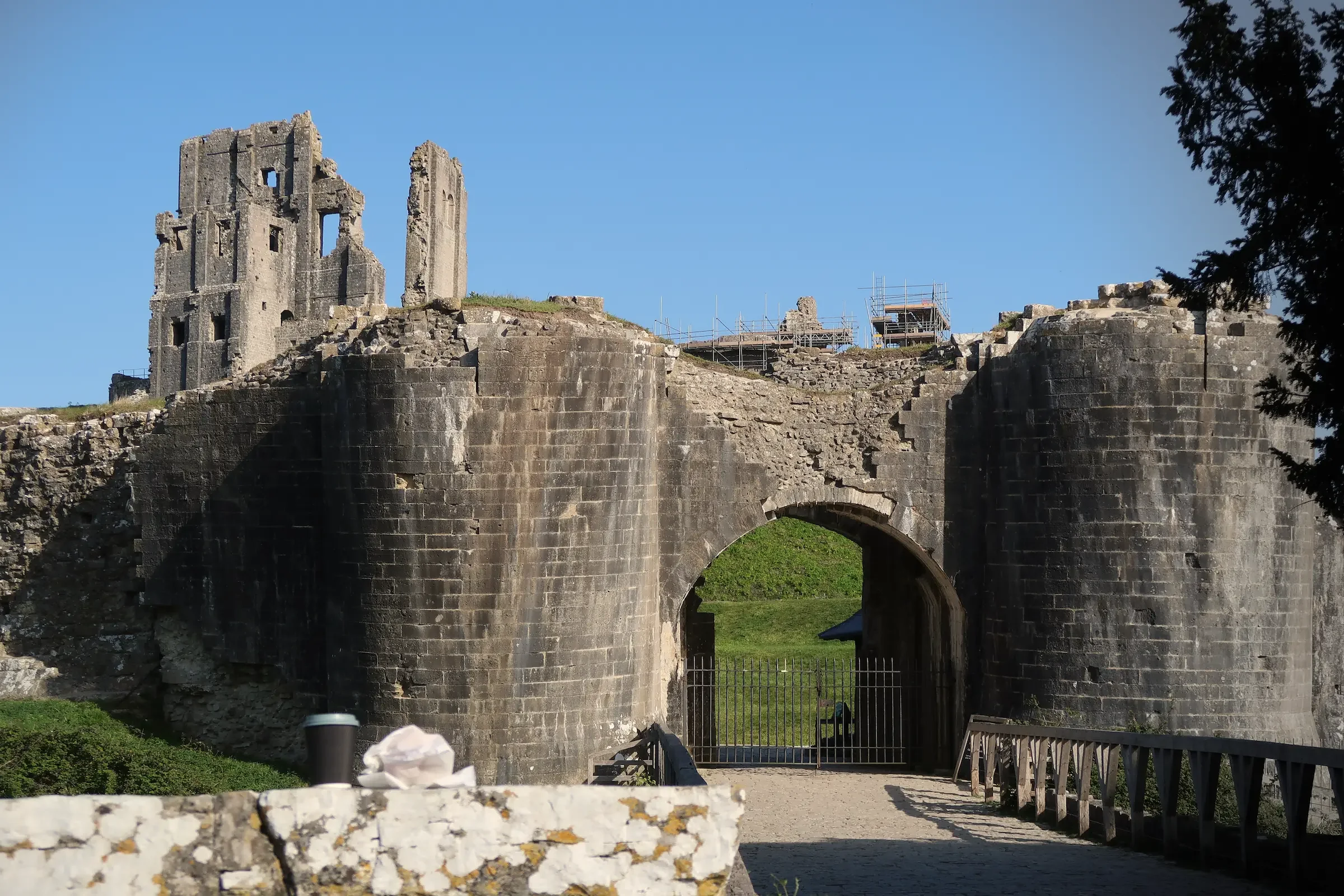
Corfe Castle is an iconic stronghold in Dorset. It imparts the feeling of an ancient fortress combined with the sense of loss and fallen grandeur from its utter ruination.
Evidence suggests that a fortification has stood on this site since Anglo-Saxon times, with post-holes having been found which mark the probable site of a great hall, and it seems likely that this is where Edward "The Martyr", a king perhaps sixteen years old at the time, was stabbed to death in 978.
But it is from after the Norman conquest, as William the Conqueror consolidated his power, that Corfe Castle as we know it, with its stone walls, was being built with the keep being completed in 1105. It was unusual at this time for castles to include stone in their construction, indicating the importance and status of the site.
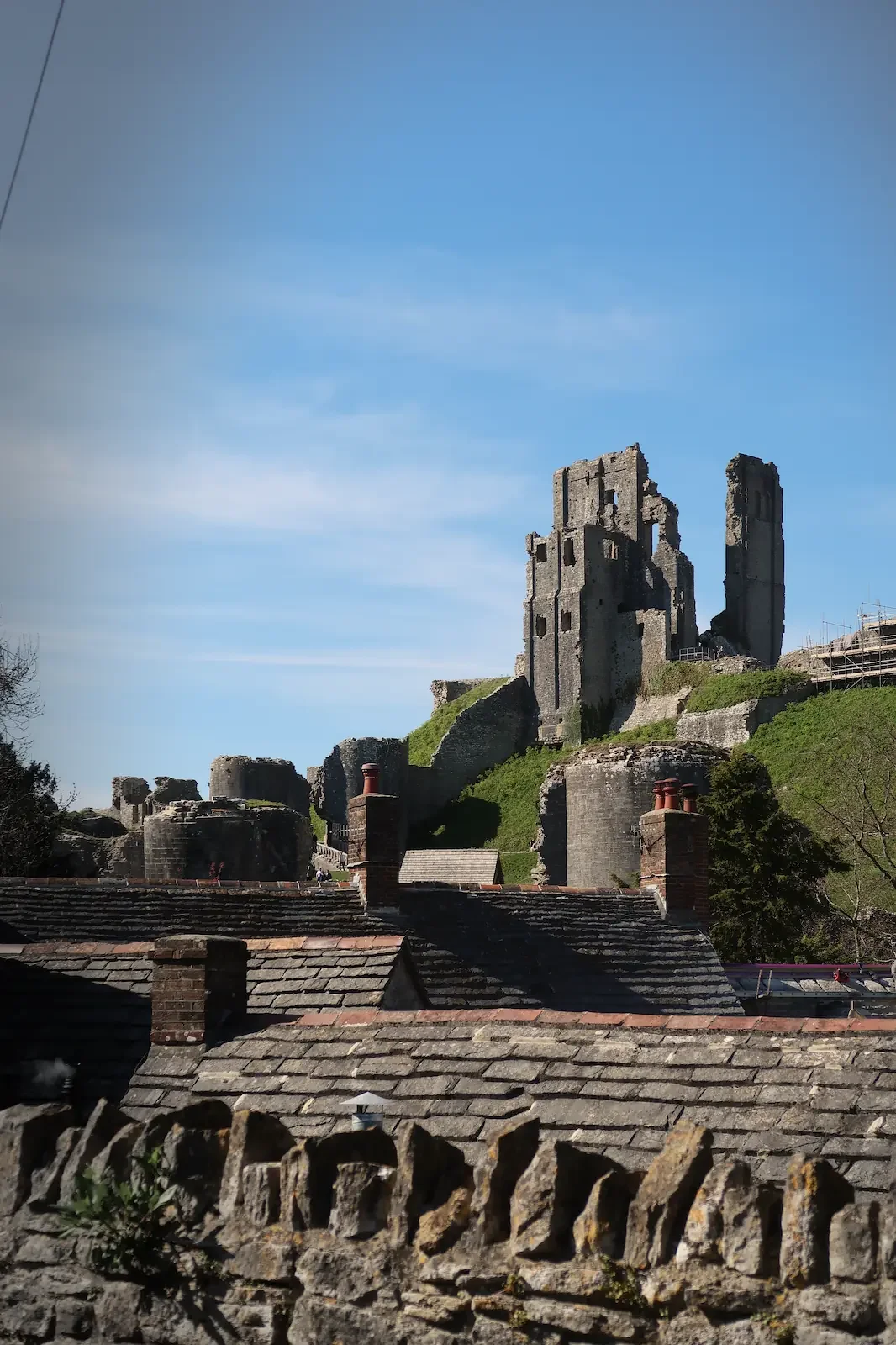
The castle was of great strategic importance, commanding a gap in the Purbeck hills on the route between Swanage and Wareham and defended the Norman links with their heartland across the channel. It sits atop a high, imposing hill, its steep sides carved from the chalk hills by the streams on either side. Its presence imposes on the landscape for miles around and its defensibility is immediately apparent. Indeed, despite coming under attack and siege many times, it was never taken by force. In the end, though, it would fall instead to treachery.
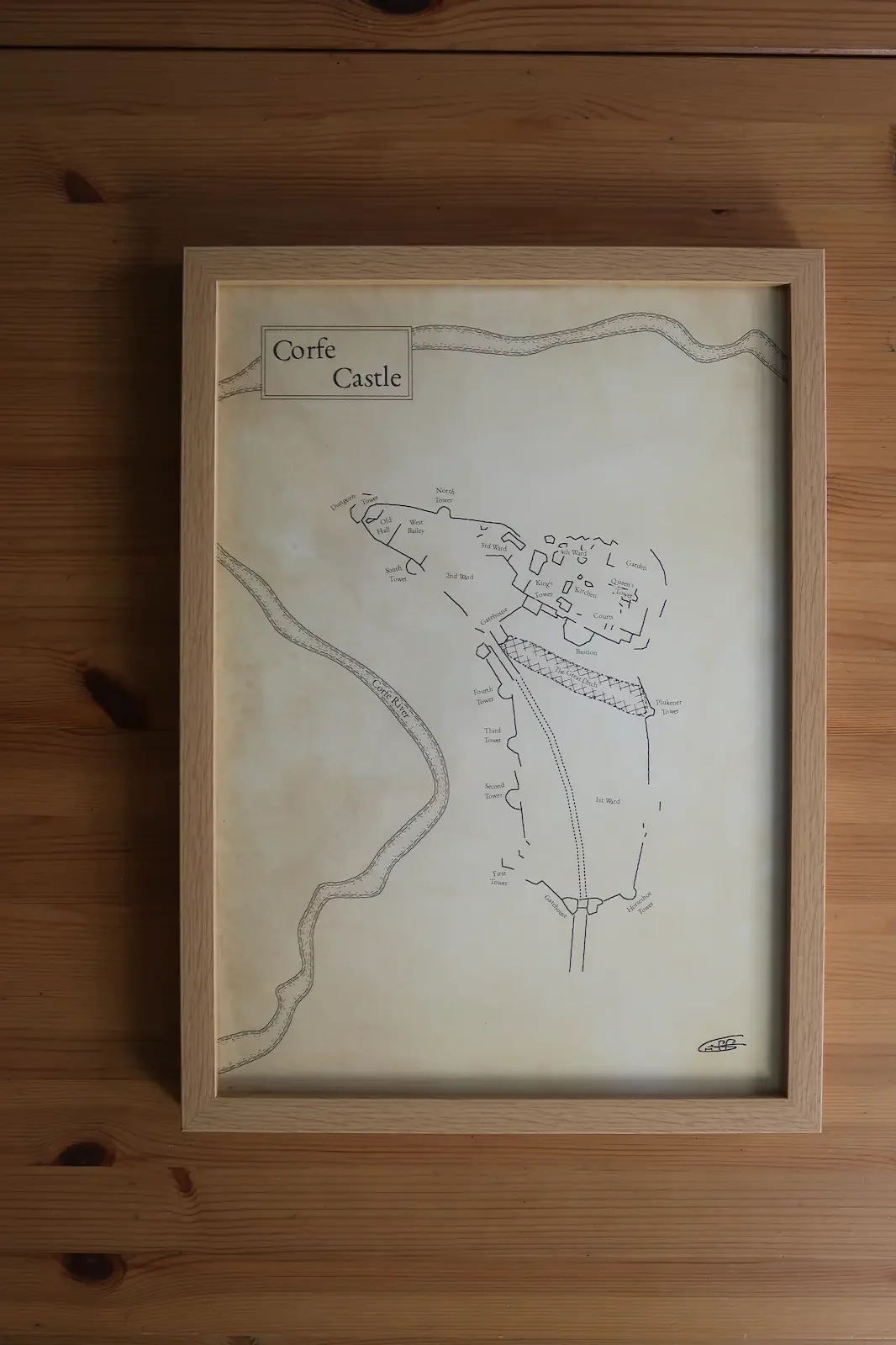
Emerging through the gatehouse, the 1st Ward opens up in front. As is often the case with places steeped in so much history, multiple names may have been given to its many features, with the origins of these names often having been lost to time. Some sources refer to the "wards" whilst others refer to the "baileys" for example, and The Dungeon Tower is also known as the Butavant Tower. The name Butavant derives from the Norman-French "but savant", meaning prow or forwards (similar to the etymological route of butress), whilst the name Dungeon Tower refers of course to its use as a dungeon, or oubliette.
The oubliette was a particularly terrifying method of execution, whereby the condemned were imprisoned, "forgotten", and left to die.
In the 13th Century, King John (the first) imprisoned twenty-two knights, captured at Mirebeau, together in this small space, where they were left to slowly perish and rot.
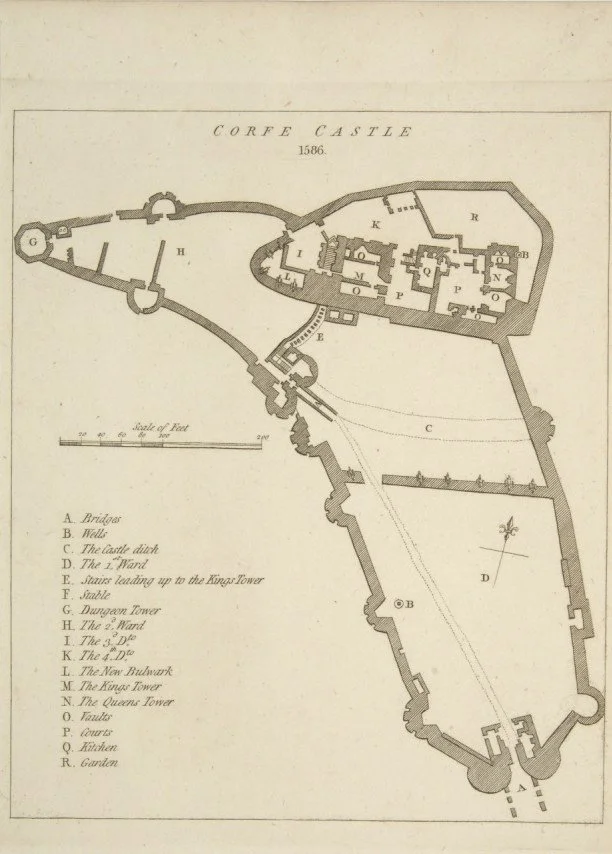
a 1586 map of Corfe Castle from the Kingston Lacy archives.
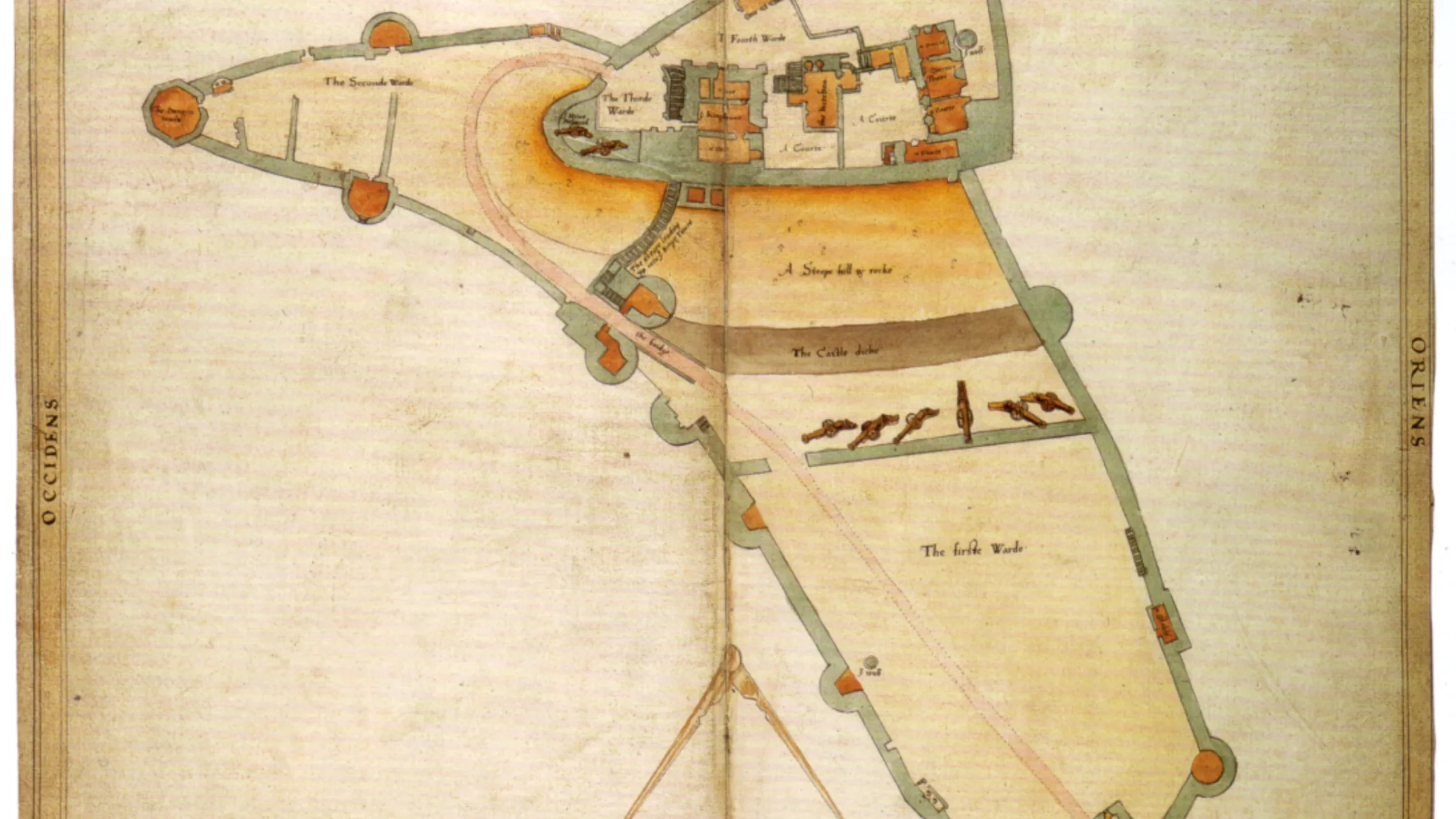
A 1586 map by Ralph Treswell
The Plukenet Tower (pronounced Ploo-Kuh-Nay), is named after Constable Alan de Plukenet, who built this tower in 1269, whilst the 1st, 2nd, 3rd and 4th towers have a rather more obvious naming convention (there are 9 towers in total).
The fate of Corfe Castle was to be decided by the English Civil War. In 1643 the castle was besieged whilst Sir John Bankes and the main force were away, defended by Lady Mary Bankes, her six daughters, a handful of servants and just five soldiers. With very little in the way of weapons they pelted the attackers with stones and hot embers, holding out for six weeks until a Royalist relief army arrived and pushed back the Roundhead forces.
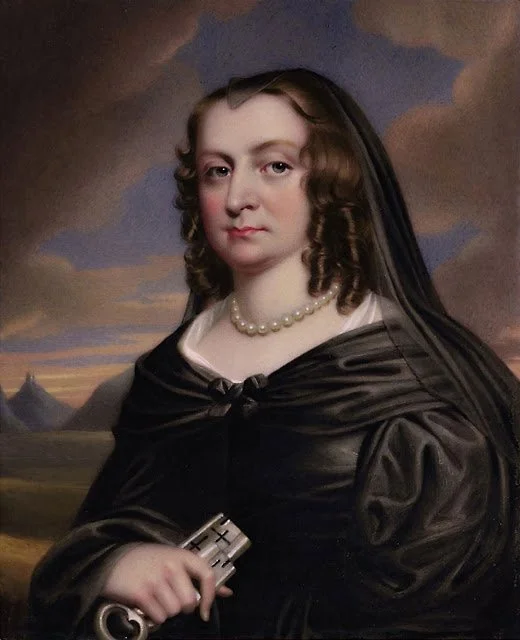
In late 1645 the castle came under siege again. By 1646 the castle, one of the last Royalist strongholds holding out, had not yet fallen. The battle of Naseby in June 1645 had effectively destroyed the King's main field army and the outcome of the war seemed inevitable. Yet the garrison did not yield. One of the Officers, Colonel Pitman, had decided which way the winds of war were blowing. He offered to Lord Bankes that he should attempt to escape the castle and evade the besieging forces, making his way into Somerset to return with a hundred Royalist soldiers and bring them into the castle as reinforcements. But the soldiers he returned with were Parliamentarians in disguise, who waited until an assault was launched from without to then attack also from within. The castle, for the first time, was captured.
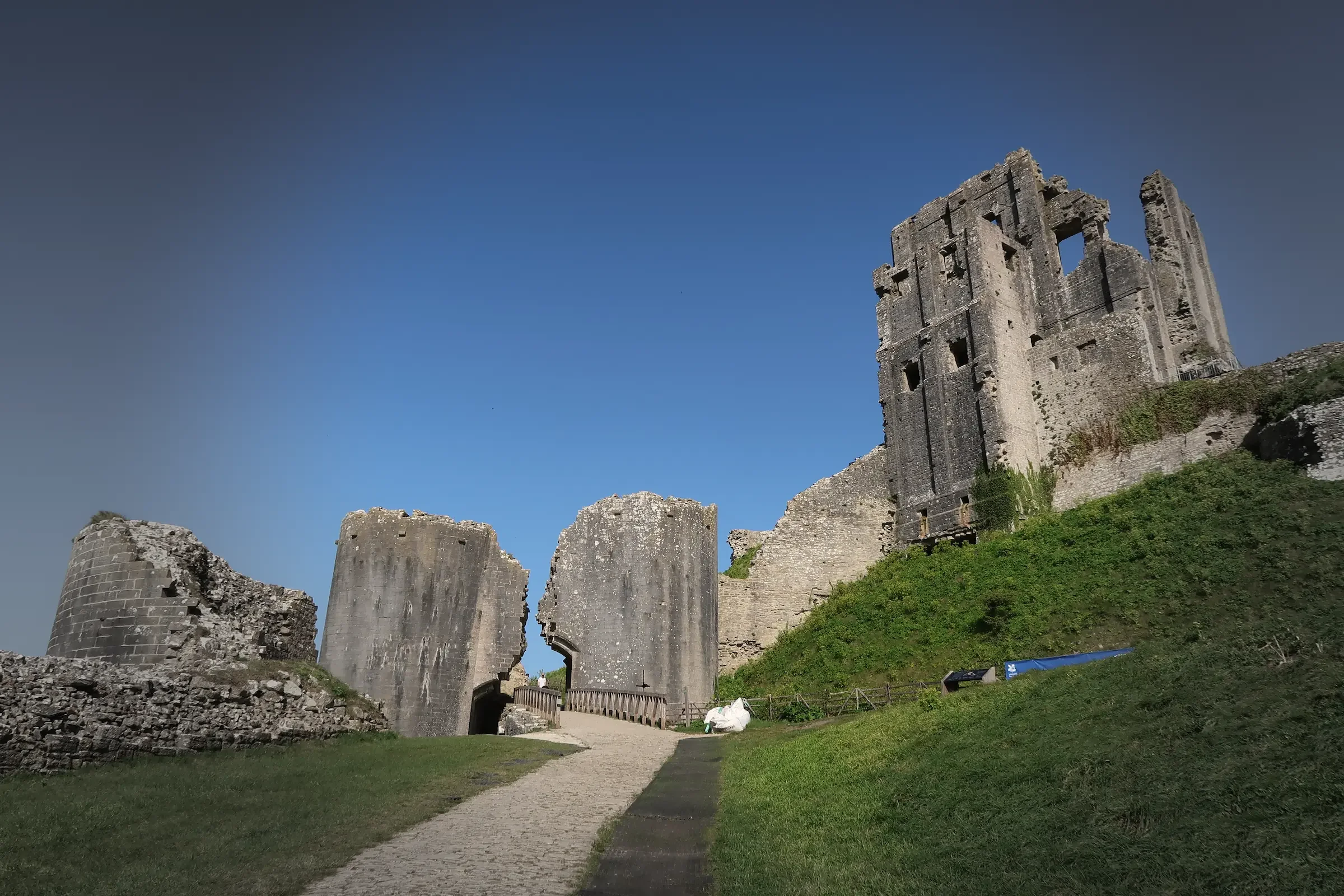
In the years following the Civil War, the castles of England were systematically "slighted", their defensive capabilities destroyed by demolition. In this way many castles could be handed back to their owners, but the age of England's castles as centres of power was at an end.
In 1646, Captain Hughes of Lulworth arrived to destroy Corfe Castle by order of Parliament. By a combination of sapping, tunnelling and gunpowder the walls and keep were destroyed, creating the Castle as we see it now.
On the grassy bank below The Great Ditch, the castle seems peaceful. A few people wander across the ward, children play hide-and-seek amongst the towers and a steam-train chugs past in the distance. I pour myself some tea from the flask and rummage for a sandwich. Laying back, I enjoy the shade and look up at the keep towering above me, resting in this ancient place.
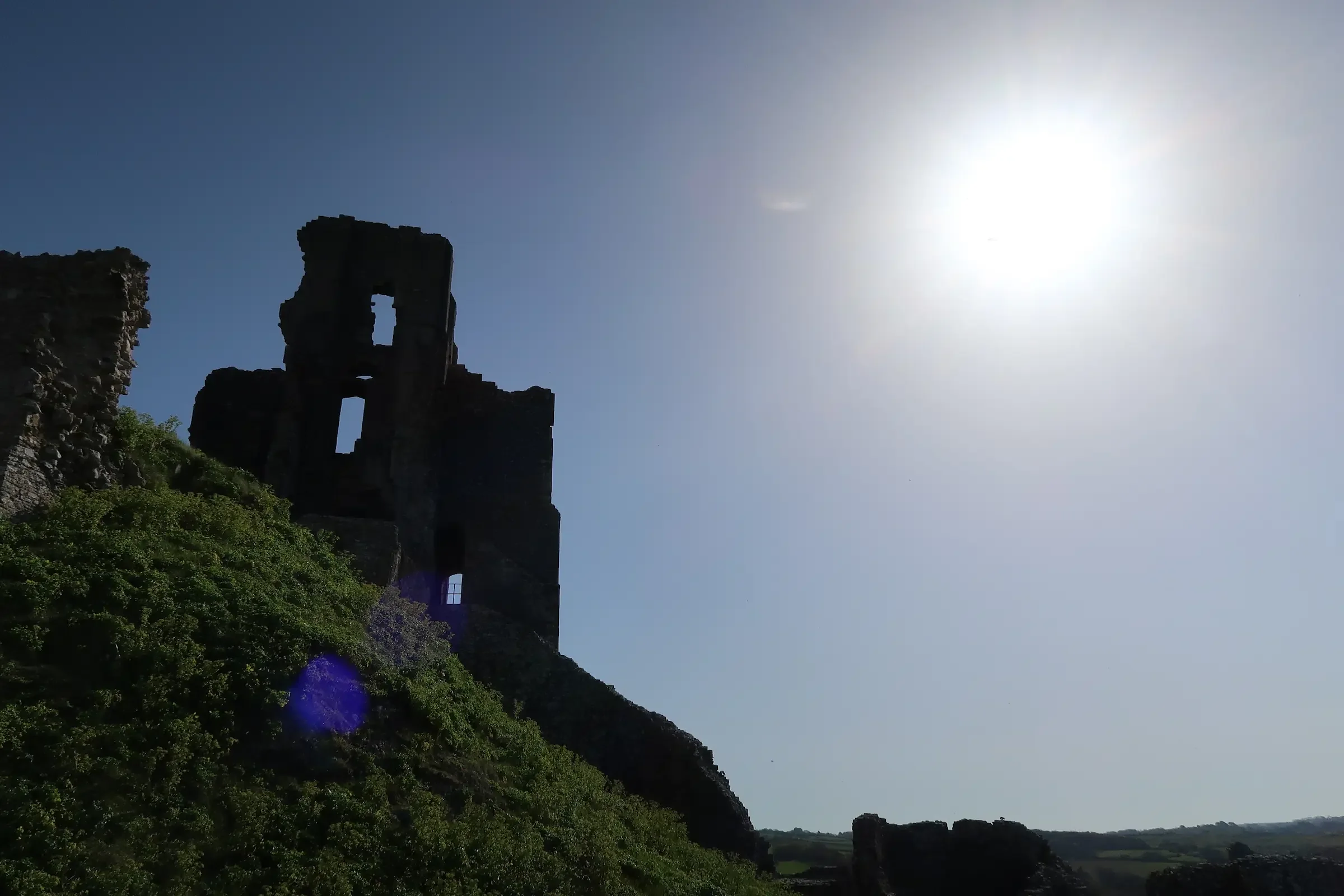
The iconic Corfe Castle, an imposing stronghold in Dorset with a history including power, murder, conquest and treachery.
This map shows the ruined castle along with the names of its key places.
Each map is created through a combination of detailed historical research, field-work and modern cartographical techniques, blended with my passion for history, places and maps.
Print Options; Archival (A3)
Unframed £48
Framed £65
Notes
Each piece is individually printed, and subtle variations in tone and finish may occur, reflecting the nature of fine art production.

The iconic Corfe Castle, an imposing stronghold in Dorset with a history including power, murder, conquest and treachery.
This map shows the ruined castle along with the names of its key places.
Each map is created through a combination of detailed historical research, field-work and modern cartographical techniques, blended with my passion for history, places and maps.
Print Options; Memento (A5)
Unframed £15
Framed £24
Notes
Each piece is individually printed, and subtle variations in tone and finish may occur, reflecting the nature of fine art production.
