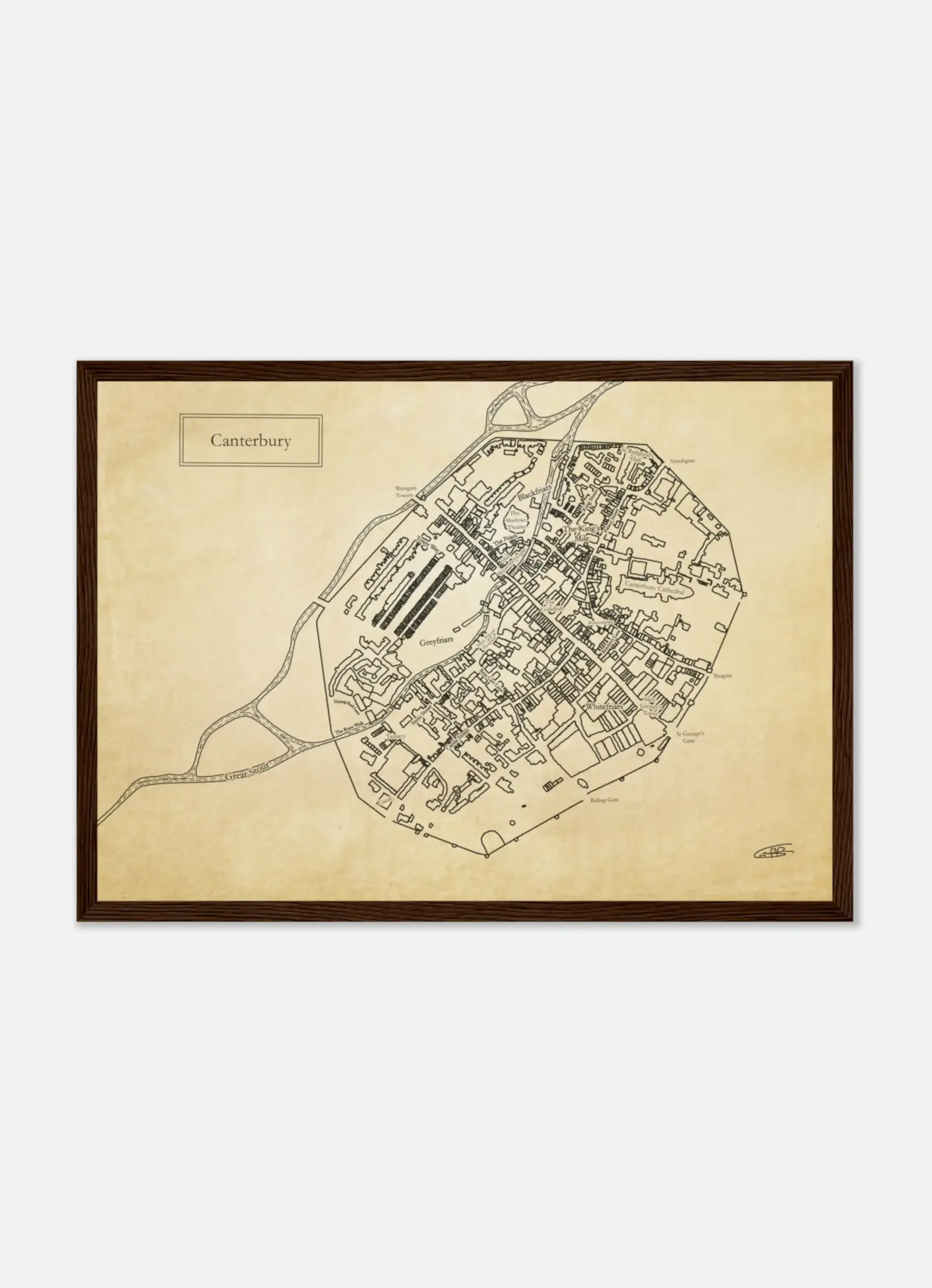
Canterbury is a city steeped in history. This map is part of an ongoing series exploring historic towns and cities, showing the extent formed by the historic city walls. Key areas and the intriguing names of towers, gates and places let you explore this city through its layers of time. The result is a map, in my own historic styling, exploring the depth, structure and past of each place.
Each map is created through a combination of detailed historical research, field-work and modern cartographical techniques, blended with my passion for history, places and maps.
Unframed £48
Framed £68
Free Worldwide Shipping
Notes Each piece is individually printed, and subtle variations in tone and finish may occur.
“Coming into Canterbury, I loitered through the old streets with a sober pleasure that calmed my spirits, and eased my heart. … the venerable cathedral towers and the old jackdaws and rooks whose airy voices made them more retired than perfect silence would have done; … the still nooks; … the ancient houses … everywhere—on everything—I felt the same serener air, the same calm, thoughtful, softening spirit.”
Extracts from David Copperfield, by Charles Dickens, combined for effect
A settlement has existed at the site of Canterbury since Paleolithic times. The names and occupiers layer on one-another. Durou̯ernon, Stronghold by the Alder Grove, became Durovernum Cantiacorem when the Romans captured the settlement (the Cantiaci being a Celtic tribe inhabiting most of what is modern-day Kent. The Romans set about rebuilding the city, forming new streets, adding a theatre, temple, forum and public baths. Whilst at first no major military garrison was stationed here, in the late 3rd century they added to the cities defences by building an earth bank and a wall with seven gates.
After the Romans left Britain, the town was abandoned for much of the next century, inhabited only by a few farmers, and the city crumbled. Gradually, an Anglo-Saxon community began to settle inside the walls. The town became an increasingly important trading site and, by the mid 7th century, gold coin were being struck at the Canterbury mint.
Canterbury was besieged and pillaged by the Vikings, then later surrendered without resistance to William the Conqueror who swiftly added a motte-and-bailey castle.
The fame of Canterbury as it stands today arguably began at the end of the 6th century when Canterbury Cathedral was founded by Augustine, and the city became the spiritual centre of the English Church. The murder of Thomas Becket, in 1170, and the construction of a shrine to the martyr, established Canterbury as an international pilgrimage destination, and pilgrims also travelled to pay tribute to St Alphege or to receive the healing water of St Thomas.
The city was home to three major mendicant orders: the Greyfriars, the Whitefriars and the Blackfriars, and their legacy can be seen in the surviving names of these districts.
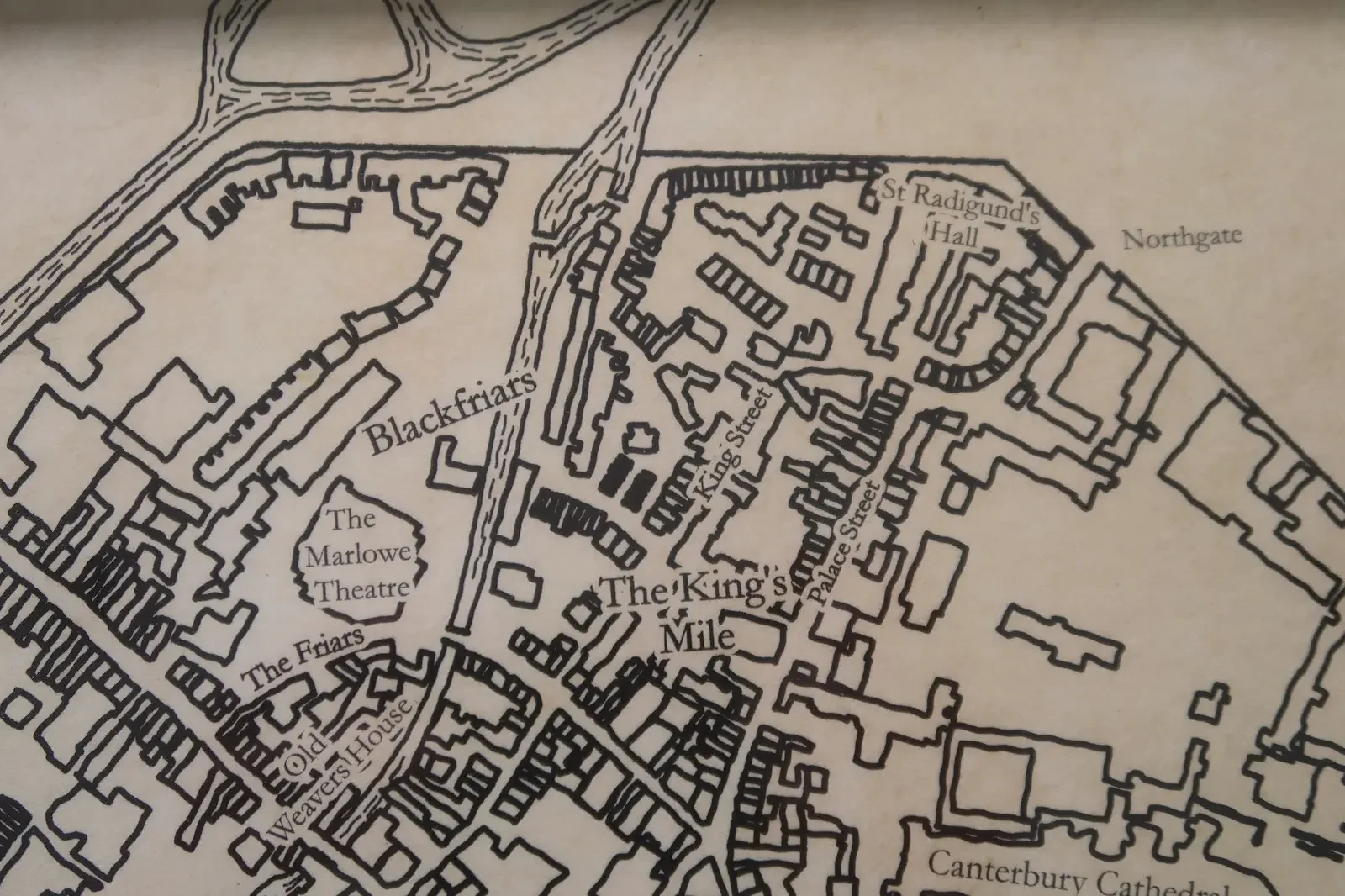
Clues about the city's past and trades can also be found elsewhere, amongst the names of streets and alleys.
On the western side of the old city, where the Great Stour runs through the remnants of the old walls, can be found the Tannery, Drying Shed lane and the Rope Walk.
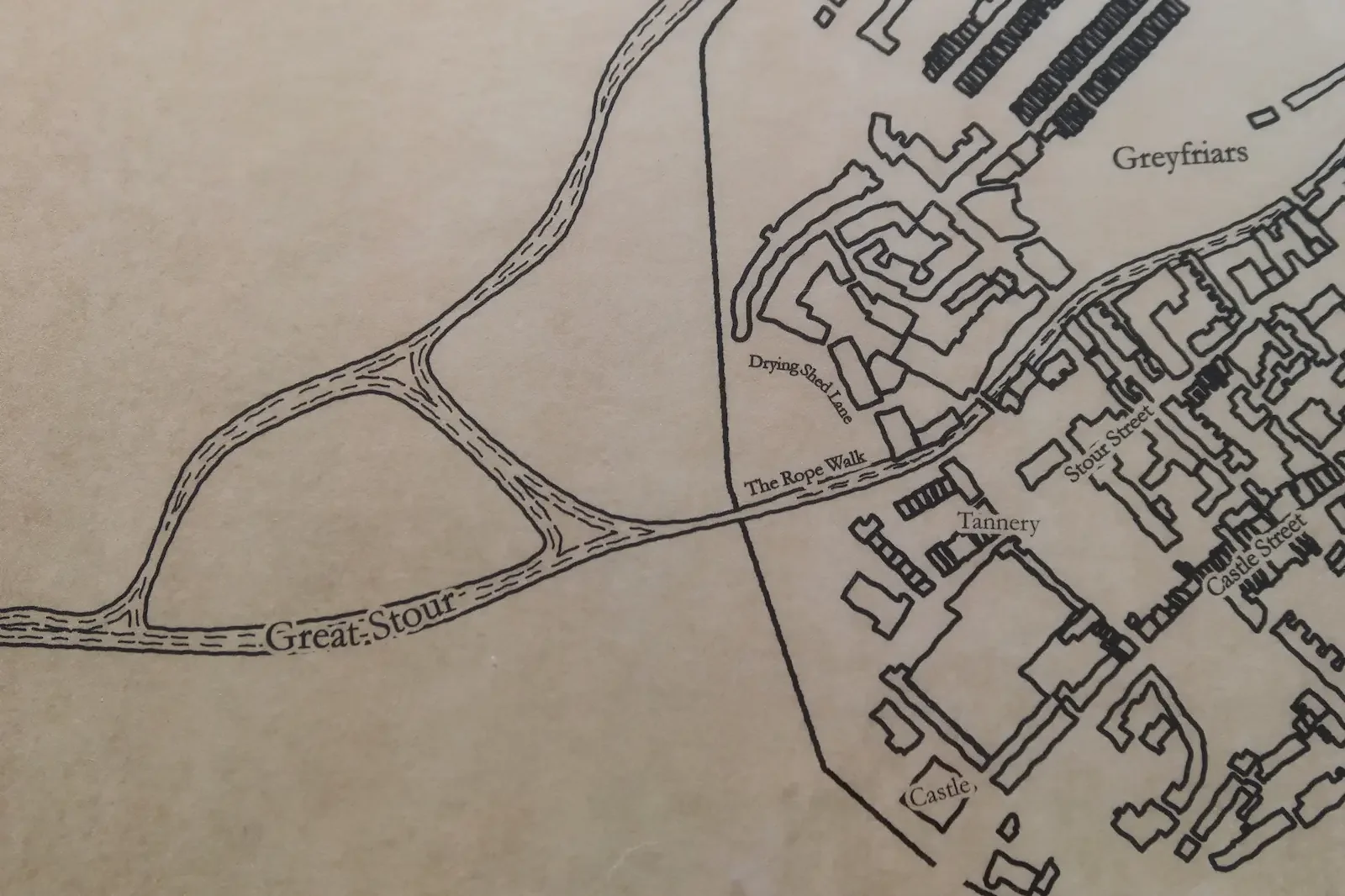
The original tannery here was established over 200 years ago by the Williamson family. During its time, the tannery supplied a high demand for footwear, saddles and harnesses, only closing its doors in 2002.
The area here beside the Stour is believed to have been used by the Romans for relaxation, much like a beach. Later, layers of fat and waste from the tannery built up, effectively burying the site but preserving important archaeological finds.
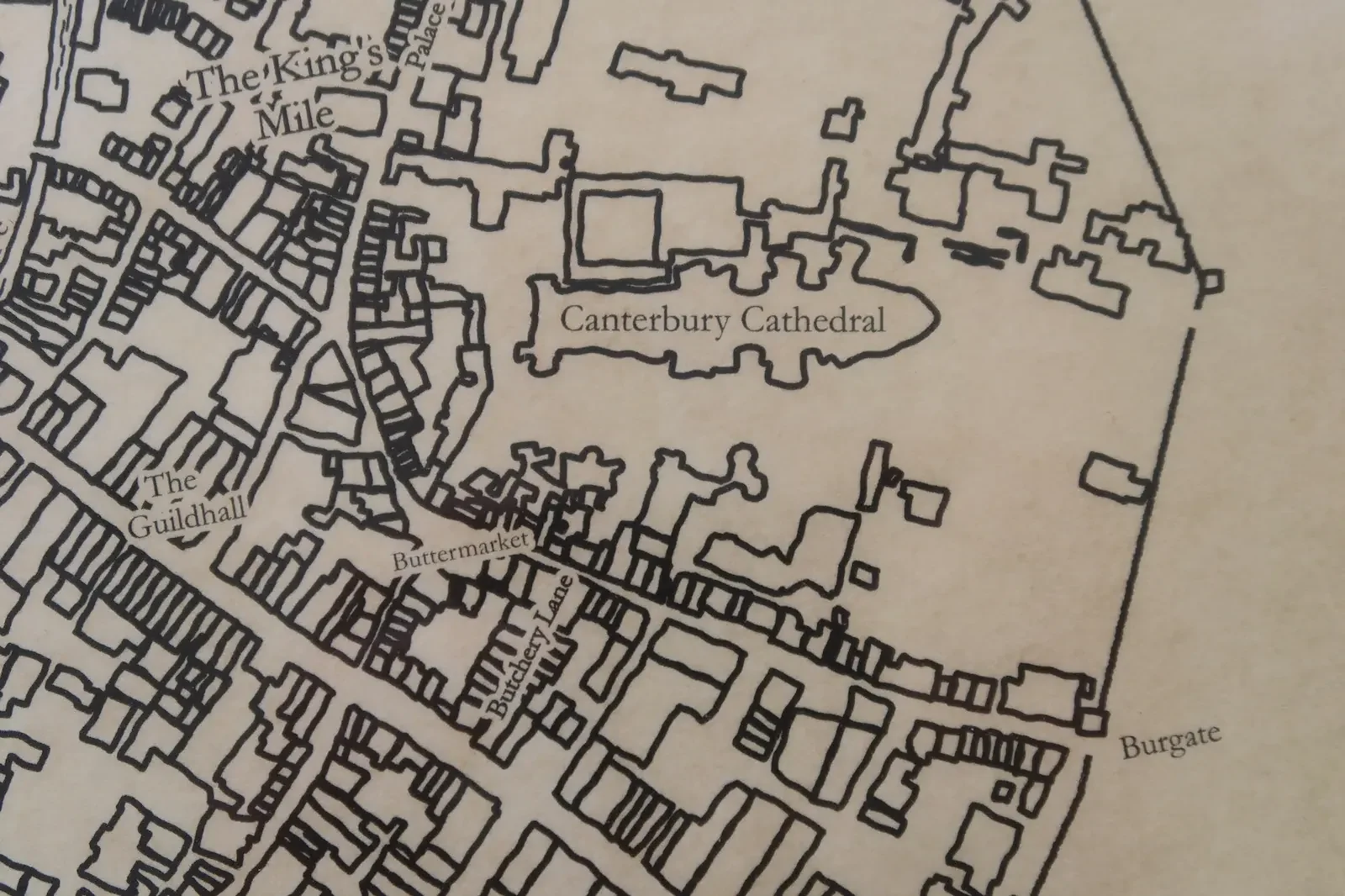
The Buttermarket was, up until around the mid-17th century, known as the Bull Stake. Bulls were tied here overnight to be baited by dogs in the belief that this would produce a higher quality of meat, doubling as public entertainment.
"We may imagine the confusion, riot, and clamour, in such places as the "Butter Market," once denominated the "Bull's Stake," when one bull was baited after another by the butchers; the meat of these animals, by order of Burghmote, not being allowed to be sold unless the bull had been baited previously to his being slaughtered. Now and then an infuriated animal broke from the stake, carrying terror and confusion before him as he frantically rushed through the narrow thoroughfares of the Mercerie, followed by shouting butchers and by yelling dogs, scarcely less savage or brutal than their masters."
Canterbury in the olden time, John Brent
This was also once the site of a gibbet, a place of punishment and execution.
A snapshot in time, whilst interesting, would not to my mind have conveyed the depth of this place. Rather than selecting one specific year or era, this map combines layers of Canterbury's history. Many of the buildings shown are in their modern positions, the place-names selected draw out the usage of these streets and areas through the years and the shape of the city being formed by ancient city walls.
Canterbury is a city steeped in history. This map is part of an ongoing series exploring historic towns and cities, showing the extent formed by the historic city walls. Key areas and the intriguing names of towers, gates and places let you explore this city through its layers of time. The result is a map, in my own historic styling, exploring the depth, structure and past of each place.
Each map is created through a combination of detailed historical research, field-work and modern cartographical techniques, blended with my passion for history, places and maps.
Unframed £48
Framed £68
Free Worldwide Shipping
Notes Each piece is individually printed, and subtle variations in tone and finish may occur.
